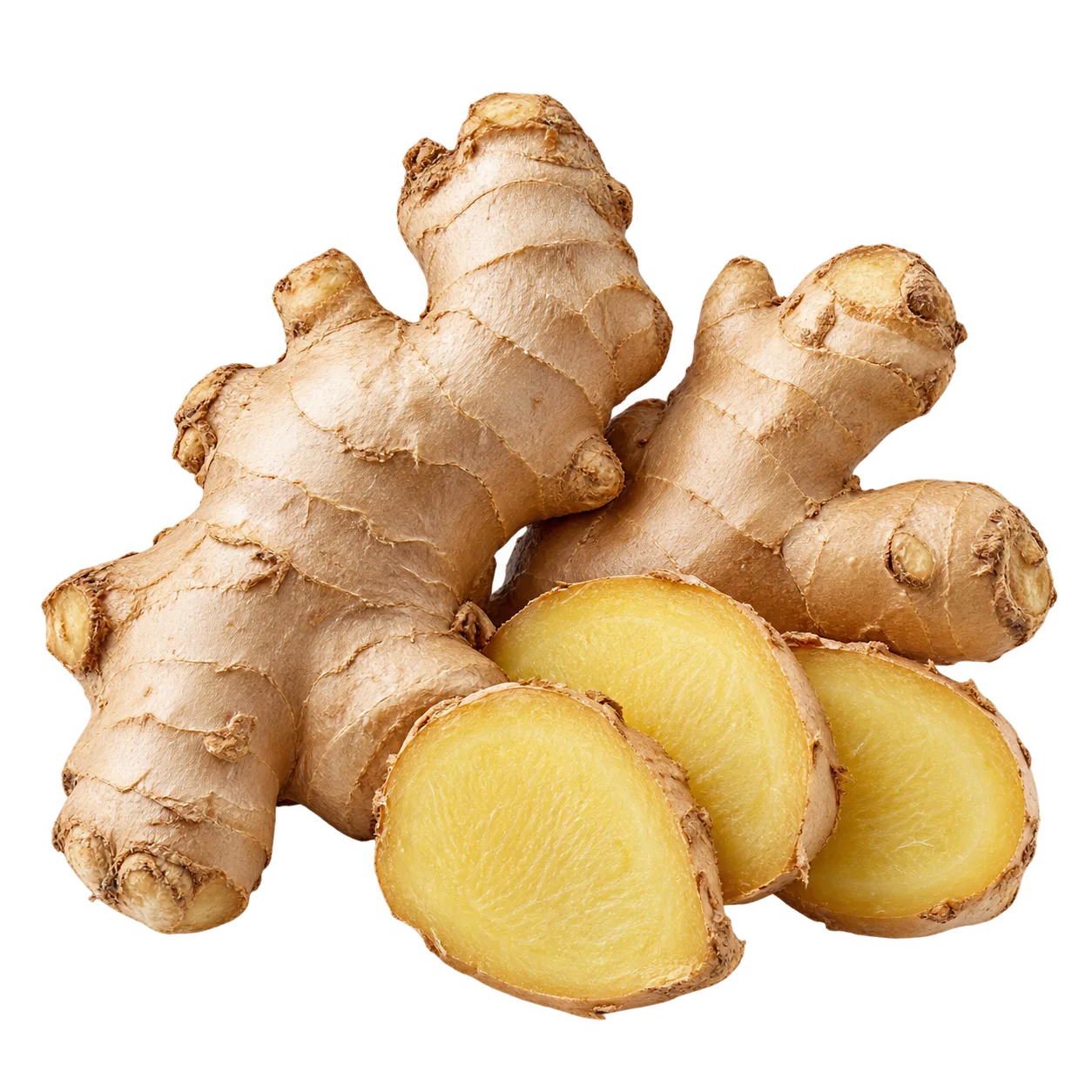
Ginger is the ingredient in most botanical respiratory formulas with the most laboratory interest behind it. It is also the one where the gap between what was studied and what gets claimed is widest, so it is worth walking through carefully.
What the laboratory work found
Research on isolated human airway smooth muscle has shown that specific ginger constituents — 6-gingerol, 8-gingerol and 6-shogaol among them — cause the tissue to relax. Some of this work also examined how the compounds behave alongside conventional bronchodilators.
Relaxed airway smooth muscle means a wider airway, which is the mechanism behind most reliever inhalers. So the finding is genuinely interesting and the mechanism is not speculative.
What it does not mean
This is the part that gets skipped in supplement marketing, and it matters more than the finding itself.
Isolated tissue is not a person. Strips of airway tissue in a laboratory bath have compounds applied directly at controlled concentrations. Nothing is digested, nothing is metabolised by the liver, nothing has to find its way through a bloodstream.
The concentrations may not be reachable. A dose that relaxes tissue in a dish may be far more than you could achieve in your actual airways by swallowing something, and that question is often simply not addressed.
No symptom was measured. Nobody in these studies had trouble breathing, because there was nobody in these studies. Tissue cannot report feeling better.
What ginger is better evidenced for
Worth saying, because it is a genuinely well-studied botanical. The evidence for ginger in nausea — pregnancy-related, post-operative, motion sickness — is reasonably good. Its anti-inflammatory activity is well documented in the laboratory and has some clinical support in osteoarthritis.
It is not a fringe ingredient with nothing behind it. It is a well-studied one whose best evidence happens to be in other areas.
The interaction to ask about
This is the practical part of the page. Ginger has mild antiplatelet activity — it reduces how readily platelets clump.
At culinary amounts this is irrelevant. At supplement amounts, combined with warfarin, apixaban, rivaroxaban, clopidogrel or regular aspirin, the effects can add. It is not a reason for alarm; it is a reason for a short conversation with a pharmacist before starting, and a product that prints its ginger amount makes that conversation quick rather than speculative.
Also worth raising: gallstones, since ginger increases bile flow, and any surgery coming up, where stopping botanical supplements one to two weeks beforehand is standard advice.
Questions people also ask
Does ginger do anything for the airways?
The strongest laboratory signal is ginger compounds relaxing airway smooth muscle in isolated tissue. Those ginger benefits come from tissue in a dish, not from people with symptoms, and that distance is the entire story.
What is the link between ginger and respiratory health?
Laboratory work showing ginger compounds relax airway smooth muscle in isolated tissue. Real and replicated, and a long way from demonstrating anything in a person with symptoms.
Is ginger safe with blood thinners?
Check before you start. The antiplatelet effect is mild but real, so if anything you take thins your blood, that conversation belongs in advance rather than afterwards. Cooking with ginger is not the concern; supplement-strength amounts are.
One Small Daily Habit
Packages from $49 a bottle, every one with the same 60-day guarantee.
See Package PricingThese statements have not been evaluated by the Food and Drug Administration. BreathiZen® is a dietary supplement and is not intended to diagnose, treat, cure or prevent any disease. Nothing here is medical advice. Prices, shipping and guarantee terms are set by the official retailer and confirmed at checkout. Speak to your doctor before starting any supplement.
Sources and further reading← Back to all articles