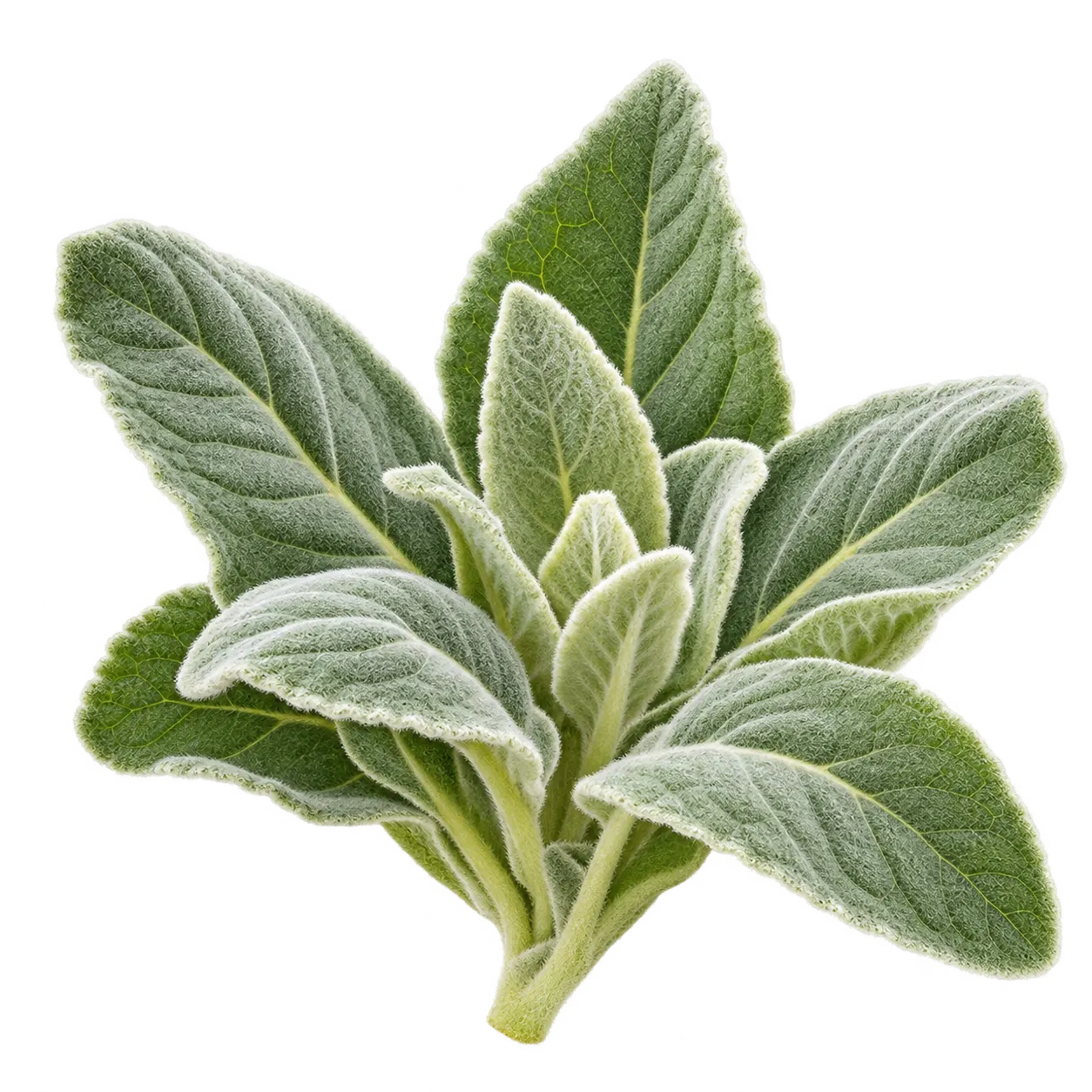
Mullein appears in almost every botanical respiratory product sold, and the writing about it tends to fall into two unhelpful camps: uncritical enthusiasm, or dismissal on the grounds that traditional use proves nothing. Neither is quite right.
The plant
Verbascum thapsus — great mullein — is a tall biennial with soft, felted gray-green leaves and a yellow flower spike that can reach two meters. It grows on waste ground, roadsides and disturbed soil across Europe, Asia and North America, and most people have walked past it without knowing what it was.
The convergence worth noticing
Here is the part that deserves more attention than it gets. Mullein was used for respiratory complaints in European folk medicine, in Appalachian practice in North America, and in Ayurvedic tradition in India.
Those traditions developed largely independently of one another, and all three landed on the same plant for the same category of use. That is not proof of anything in the clinical sense. But when unconnected cultures with access to thousands of plants repeatedly select the same one for the same purpose, it is reasonable to find that interesting rather than dismissing it.
What is actually in it
Mullein leaf contains mucilage — polysaccharides that form a gel in water and coat mucous membranes. It also contains saponins, flavonoids including verbascoside, and iridoid glycosides.
The mucilage is the component most often invoked, and the proposed mechanism is straightforward: a soothing coating on irritated tissue. That is plausible for the throat, which the preparation physically contacts. Whether anything reaches the lower airways in meaningful quantity is a separate and much less settled question.
Tea, tincture or spray
Mullein tea has one genuinely important practical requirement: it must be strained through something fine. The leaf hairs are irritating to the throat, and an unstrained infusion achieves the opposite of what you wanted. A coffee filter works; a tea strainer often does not.
It also needs brewing, which is where most people quietly stop after a week. A tincture or spray removes both problems, and neither format has human trial data behind it, so the choice comes down to what you will actually keep doing.
Safety
Mullein has a good safety record in traditional use. The seeds contain rotenone and should not be consumed — leaf and flower preparations are the ones used. Anyone allergic to plants in the figwort family should avoid it, and as with anything, it is worth mentioning to a pharmacist if you take prescription medication.
A reasonable position
Mullein is a plausible, well-tolerated traditional remedy with a long history and limited modern evidence. That is neither an endorsement nor a dismissal. It is simply where the evidence currently sits, and a product that tells you so is more trustworthy than one that does not.
Questions people also ask
What are the benefits of mullein?
Traditional accounts of mullein benefits centre on calming an irritated airway and taking the edge off a dry cough, and three unrelated herbal traditions reached that use separately. The human trial literature is slim, and saying so plainly is the least we can do.
Is mullein for lung health actually supported?
By tradition across three unconnected herbal systems, yes. By human trials, barely. Mullein respiratory support is a reasonable traditional claim and an overstated modern one, and the honest position sits between the two.
Mullein tea versus spray, or mullein spray versus capsules?
On mullein tea versus spray the spray wins on adherence — no straining the irritating leaf hairs, no brewing. For mullein spray versus capsules the gap is smaller and comes down to which you will remember. No trial data separates any of the three.
Is mullein tea better than a spray?
Mullein tea needs fine straining, because the leaf hairs scratch, and it needs brewing, which is where most people quit by week two. A spray sidesteps both. Neither has human trial data behind it, so pick the one you will keep doing.
One Small Daily Habit
Packages from $49 a bottle, every one with the same 60-day guarantee.
See Package PricingThese statements have not been evaluated by the Food and Drug Administration. BreathiZen® is a dietary supplement and is not intended to diagnose, treat, cure or prevent any disease. Nothing here is medical advice. Prices, shipping and guarantee terms are set by the official retailer and confirmed at checkout. Speak to your doctor before starting any supplement.
Sources and further reading← Back to all articles