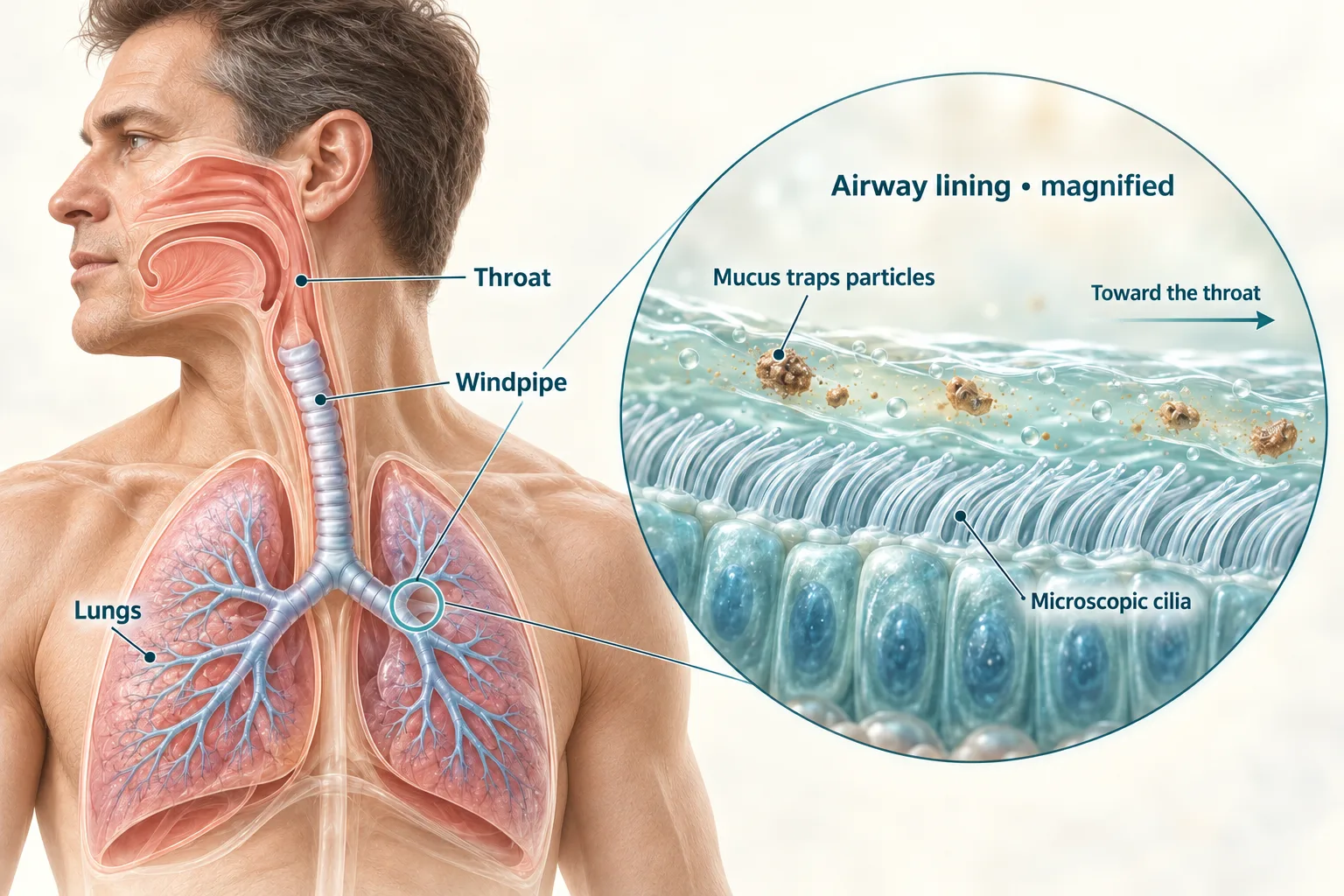
Ask someone what has affected their lungs and they will mention cigarettes or say nothing. Almost nobody mentions the workshop they spent their twenties in, and for a significant number of people that is the larger part of the answer.
Why it goes uncounted
Smoking is a decision you make several times a day and remember making. Occupational exposure is a Tuesday. There is no moment to point at, no packet, nothing to feel guilty about, and so it does not appear in the story people tell about their own health.
Estimates of the share of chronic lung disease attributable to workplace exposure commonly run into the double digits. It is not a small factor.
The jobs worth thinking about
Construction and demolition. Silica from concrete, brick and stone is the serious one, and dry cutting without suppression produces enormous amounts of it. Asbestos remains a live risk in buildings of a certain age.
Welding and metalwork. Metal fume is a well-documented respiratory hazard, and stainless steel work adds chromium and nickel.
Baking and food production. Flour dust is one of the leading causes of occupational asthma, which surprises most people who hear it.
Farming. Grain dust, animal housing, mold in stored feed.
Auto repair. Diesel exhaust, solvents, brake dust, and spray booths without adequate extraction.
Cleaning. Chlorine and ammonia products in poorly ventilated rooms, especially when mixed. Professional cleaners show measurably elevated respiratory risk.
Hairdressing and nails. Persulphates and solvent vapours in small rooms with the door shut.
If you are still in it
Extraction at the source beats any mask, because it removes the dust before it reaches your face. Use it even when the job is quick — the quick jobs are where people skip it.
Wet cutting rather than dry, wherever the material allows. Water suppression removes the overwhelming majority of silica dust.
A fitted respirator rather than a loose paper mask, and fitted means fit-tested rather than merely purchased. A beard defeats a tight-fitting respirator entirely, which is worth knowing before relying on one.
And if your workplace offers health surveillance, take it. A spirometry baseline from your twenties is worth a great deal at fifty.
If it was decades ago
You cannot undo the exposure, and the same logic applies as with smoking: what remains available is the slope from here. Tell your doctor about it — occupational history changes how symptoms are interpreted, and it is almost never asked about unless you volunteer it.
For asbestos specifically, where there was meaningful exposure, that belongs on your medical record regardless of how long ago it was.
One Small Daily Habit
Packages from $49 a bottle, every one with the same 60-day guarantee.
See Package PricingThese statements have not been evaluated by the Food and Drug Administration. BreathiZen® is a dietary supplement and is not intended to diagnose, treat, cure or prevent any disease. Nothing here is medical advice. Prices, shipping and guarantee terms are set by the official retailer and confirmed at checkout. Speak to your doctor before starting any supplement.
Sources and further reading← Back to all articles